
Building a native mobile shopping experience
TL;DR
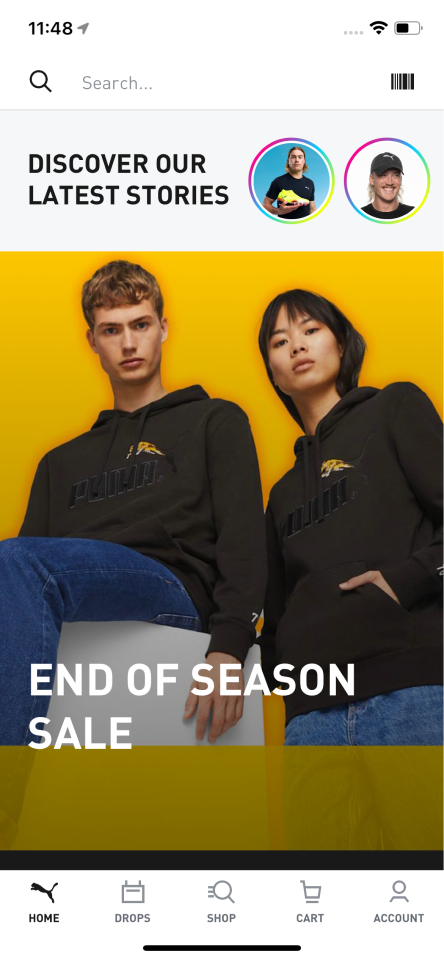
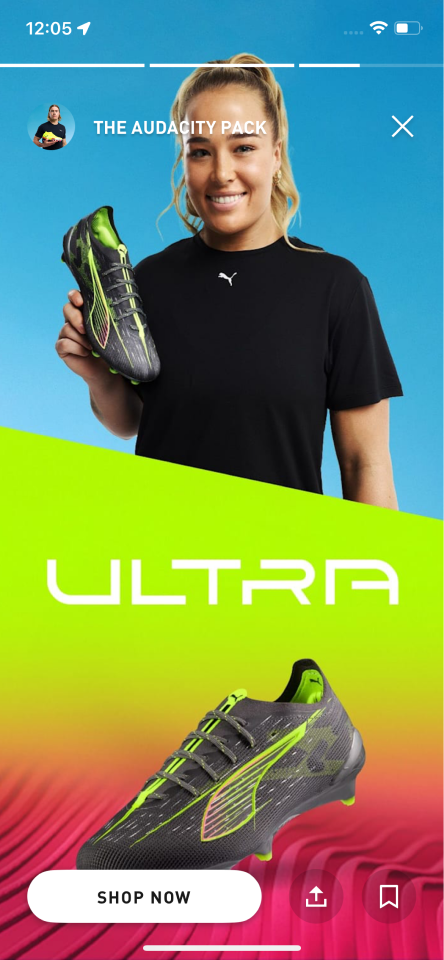
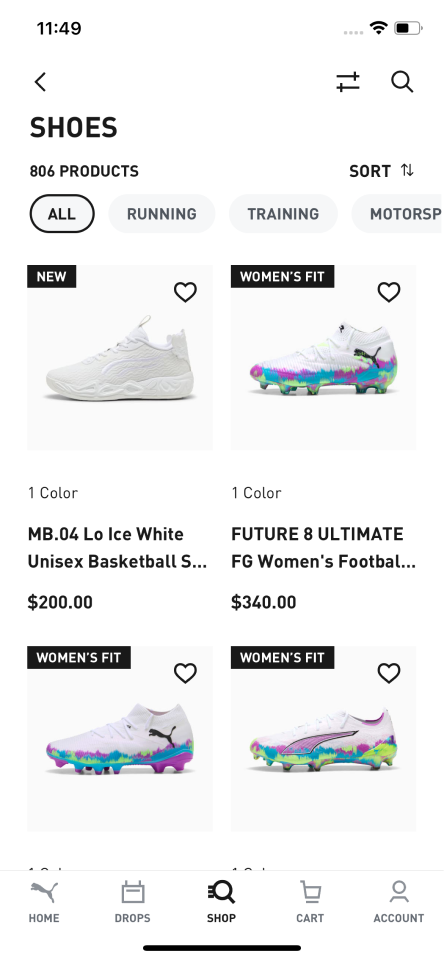
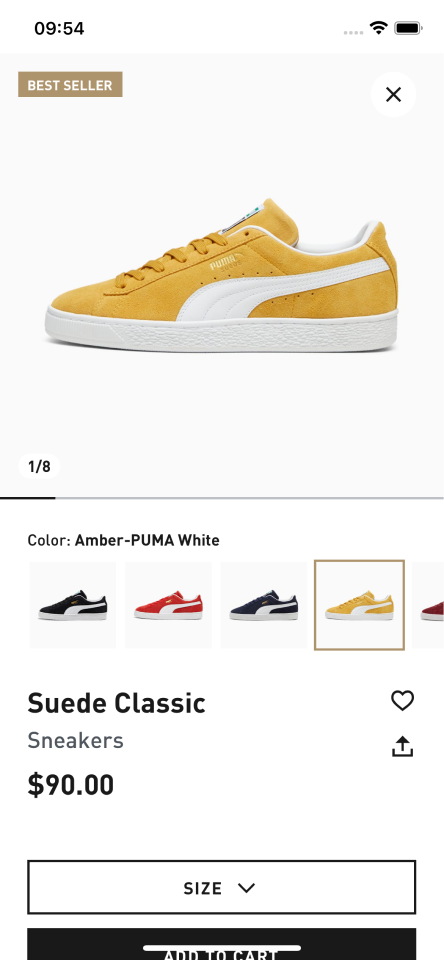
As Digital Product UX Lead, I led the design and product strategy for PUMA's first-ever D2C mobile shopping app: from its concept and wireframes through the launch across five global markets and post-launch optimization. The app launch was well received by PUMA customers.
PUMA
Shopping app
Impact
Project outcomes
6M iOS downloads + 5M Android. 160% relative lift in e-commerce conversion rate vs. the legacy mobile site. +20% lift in average order value, driven by more items per order.
Retrospective
Project background
Historically, Puma is a wholesale brand. In 2021 the company did not have a D2C mobile app. This was not only a competitive disadvantage, it was a strategic gap.
This gap became urgent because pandemic-driven e-commerce growth had pushed mobile traffic past 80% of the total volume. The mobile website's conversion rate also lagged behind desktop due to poor site performance, lack of personalization, UX/UI problems and the e-commerce platform constraints.
Ultimately this wasn't just a UX improvement. In fact, it was a huge lost revenue opportunity and a mismatch with customers' expectations.
Goals
Conceptualize, design, and launch a high-converting, scalable, mobile-first shopping app for five key global markets to:
- Create a comprehensive future-forward, digital platform
- Drive brand engagement and customer lifetime value
- Increase repeat purchase rate
Challenges
Each market had a different payment infrastructure and logistics constraints. Some senior stakeholders were wary about the launch fearing the shopping app would cannibalize other sales. But also:
- The average person uses approximately 9 apps/day
- People use only 30% of the apps they download
- 25% of downloaded apps are only used once
My role
Connecting UX and business
As Product UX Lead, I owned the product and design strategy, from the initial concept of the app through post-launch iterative improvements and testing. I led a team of 3 designers and 6 developers and partnered closely with marketing, data, and regional business leads across five markets.
Approach
Design and development workflow
We started with competitive analysis and user research (focus groups, user interviews) across all five markets to surface both shared needs and market-specific ones. For example, cash on delivery was expected in India or a convenience-store payment in Japan.
Process and teams
We ran a lightweight agile process with short feedback loops following a continuous iteration model. The real challenge was keeping that loop tight across five markets and multiple local teams. The app itself was designed and coded by a dedicated external team.
Trade-offs
- Feature breadth vs. core quality: Deferred advanced features to perfect the shopping journey
- Differentiation vs. reliability: Accepted a simpler launch to ensure stable performance
- Speed vs. completeness: Released a focused MVP to learn from customers sooner
- Global consistency vs. local relevance: Standardized core UX while supporting market-specific needs
- Customer utility vs. brand ambition: Prioritized useful functionality over promotional features
Learnings
Reflection
Launching a first-ever mobile app carried real organizational fear. Leadership was wary of a new channel destabilizing the existing wholesale business, and that hesitation nearly delayed the launch.
Rather than trying to argue the risk away, I proposed a structured round of internal testing and feedback before going public. Getting the app in front of internal stakeholders first turned an abstract fear into a concrete, testable question, and the evidence from that round is what actually earned the green light.
Bonus
Post-launch optimization
The app was first launched in mid 2022 and has been continuously optimized since then. The post-launch optimization process is based on feedback from user research, analytics and A/B testing. The app has been updated with new features and improvements based on user and business needs.